
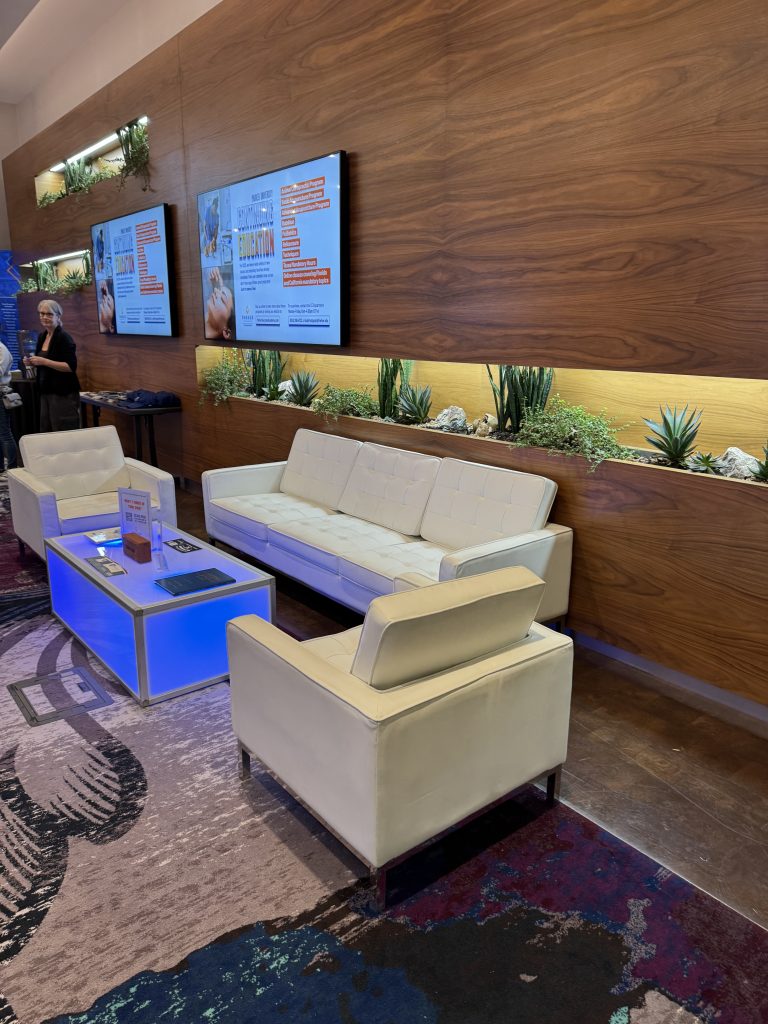
Event planning in 2026 looks very different than it did just a few years ago. Expectations are higher, timelines are tighter, and attendees are more design-aware than ever. Whether you’re producing a corporate conference, trade show, or large-scale activation, the rental company you choose can make or break your event.
Before signing a contract, here are the most important questions event planners should be asking rental companies in 2026 — and why the answers matter.
In 2026, in-house fabrication is no longer a “nice to have” — it’s a competitive advantage.
Rental companies that fabricate their own inventory can:
If a company relies entirely on third-party products, flexibility is limited. For modern events that demand customization, fabrication capability matters.
Modern events demand modular systems that adapt to different venues and formats.
Ask whether rentals can be:
Modular systems — like scenic walls or illuminated cubes — allow planners to design once and deploy many ways, saving time and budget.
Shipping and logistics are often overlooked until it’s too late.
In 2026, smart rental solutions:
Large, bulky scenic pieces may look impressive, but if they require excessive labor or freight, costs rise fast. Systems that ship small but create big visual impact are the future.
Sustainability and professionalism now go hand in hand.
Instead of asking “Can I print signage?”, planners should ask:
Illuminated gallery walls, modular scenic panels, and branded structures are increasingly replacing single-use printed signage at major conventions and hotels.
In 2026, furniture and scenic elements are no longer neutral — they’re communication tools.
Ask if the rental company can:
The best rental partners design pieces that work visually and functionally, not just fill space.
Many events now live both in-room and on-camera.
Rental companies should understand:
A stage that looks fine in person but poor on video is a missed opportunity. Scenic design must now serve both audiences.
Every venue has quirks.
Ask if the rental partner has experience with:
Venue familiarity helps avoid last-minute issues with ceiling height, loading docks, power access, and install timing.
In 2026, events are rarely static.
Ask whether the rental company can:
Scalable partners reduce stress when agendas shift or attendance grows.
With charging furniture, LED scenic elements, and illuminated displays, power planning is now part of furniture planning.
A strong rental partner should understand:
This avoids delays, tripping hazards, and last-minute redesigns.
The most important question of all.
In 2026, the best rental companies:
A true partner helps you solve problems, not just deliver products.
Event planners in 2026 need more than a catalog — they need flexible systems, smart logistics, and design-forward thinking. Asking the right questions upfront ensures your rental partner can support modern expectations around branding, sustainability, technology, and attendee experience.
The events that stand out aren’t necessarily the biggest — they’re the ones designed with intent, adaptability, and impact.
1. Why do the questions I ask a rental company matter so much in 2026?
Because modern events rely on more than furniture. Logistics, branding, power needs, sustainability expectations, and camera-ready design all impact attendee experience and event success.
2. What does “in-house fabrication” mean for event rentals?
It means the rental company designs and builds products internally rather than relying only on third-party inventory. This typically allows more customization, better quality control, and faster adjustments when event plans change.
3. How do modular rentals help event planners?
Modular rentals can be reconfigured into different layouts, scaled up or down, and used for multiple purposes (for example: counters that work as information desks, exhibit stations, or branded displays).
4. What’s the best alternative to foam core boards and disposable signage?
Reusable scenic and display solutions like illuminated walls, scenic panels, branded counters, and modular display systems. These look more professional and often deliver better visibility in large venues.
5. Should I ask about delivery, install, and dismantle before booking?
Yes. Labor windows, loading dock rules, and timing vary by venue. Confirming delivery, setup, and teardown expectations early helps avoid delays and surprise charges.
6. How early should I book rentals for 2026 conferences and trade shows?
As early as possible—especially for custom fabrication, scenic stage builds, or large-scale installs. Earlier planning increases availability and allows more design flexibility.